

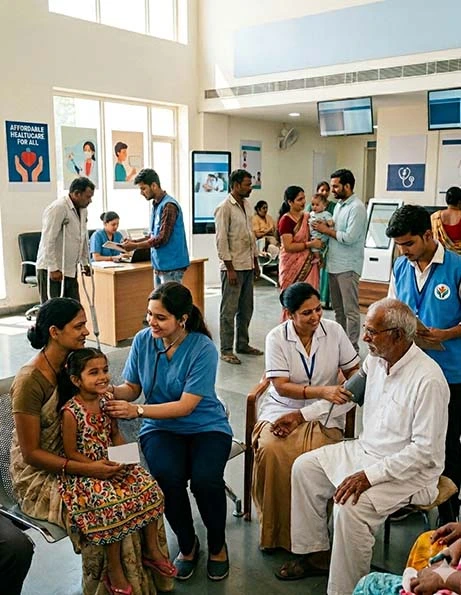
Access to basic medical care is a fundamental human right, yet it remains one of the most significant economic barriers globally. When medical expenses push vulnerable populations into poverty, social exclusion deepens. True social inclusion demands an ecosystem where marginalized communities-regardless of socio-economic status, gender, or geography- possess the same security as the privileged. The future of global development hinges entirely on redefining how we deliver modern
healthcare.
Historically, there has been an adversarial relationship between standard excellence and universal access. For decades, the dominant narrative suggested that high-tier medical interventions were inherently expensive, leaving underserved communities with substandard care. Today, a paradigm shift is underway. The future lies in bridging this gap, ensuring that advanced medical infrastructure directly services marginalized populations to create a more equitable, cohesive society.
The rapid evolution of digital infrastructure is dismantling geographical barriers that historically isolated rural and marginalized communities from premier medical centre Telemedicine, decentralized diagnostic toolkits, and AI-driven screening applications are transforming delivery pipelines. These technologies act as equalizers, allowing a field worker or a remote community health volunteer to connect seamlessly with centralized specialist hubs.
By moving triage and diagnosis from high-cost urban tertiary hospitals directly into local communities, digital ecosystems significantly drive down costs. This distributed operational model eliminates exorbitant travel expenses, lost daily wages, and systemic friction points that routinely force marginalized individuals to bypass early-stage treatments. Digital transformation proves that modern delivery can expand geographical access without compromising institutional standards.
A pervasive myth dictates that lower costs equal inferior treatment. However, the future of inclusive development depends heavily on proving that high quality and strict affordability can co-exist within a unified delivery framework. Frugal innovation-such as reimagined low-cost medical devices, standardized clinical pathways, and optimized generic pharmaceutical supply chains-is demonstrating that high-calibre medical systems can operate at a fraction of traditional costs.
Furthermore, integrating robust social protection schemes, universal insurance models, and dedicated corporate social responsibility (CSR) initiatives creates a resilient financial cushion. When public policies and corporate frameworks absorb catastrophic out-of-pocket expenditures, marginalized groups gain the confidence to seek preventative support. This structural synergy elevates the dignity of care, demonstrating that financial optimization does not mean sacrificing therapeutic outcomes.
True social inclusion requires transitioning from purely reactive, tertiary interventions to proactive, preventative frameworks. Investing heavily in localized primary care clinics, clean water access, nutritional literacy, and maternal health monitoring prevents minor conditions from escalating into chronic, debilitating illnesses that trap families in multi-generational poverty cycles.
Empowering frontline health practitioners with targeted capacity building, standardized operating procedures (SOPs), and real-time data analytical tools optimizes resource allocation. When communities actively participate in managing their local health ecosystems, institutional trust grows. This participatory framework mitigates historical marginalization, making marginalized groups active stakeholders in their own social development.
The future of healthcare is not merely a technical or medical challenge; it is a profound socio- economic imperative. Social inclusion remains an unattainable goal as long as medical emergencies act as a primary driver of financial vulnerability. By deploying advanced diagnostic and digital tools, we can fundamentally transform institutional structures.
By intentionally harmonizing high quality standards with systemic affordability, society can dismantle the barriers that separate marginalized communities from vital development opportunities. Moving forward, the true indicator of global development will not be the sophistication of our most exclusive medical centres, but our collective capacity to shield, heal, and include the most vulnerable.
Delivering Trusted Healthcare, Every Day
Peerless Polyclinic, an initiative of Peerless Giving, is dedicated to providing accessible, patient-centred healthcare through expert consultations, advanced diagnostics, preventive care, and multidisciplinary medical services. Guided by a commitment to clinical excellence and ethical practice, we at Polyclinic, support patients through every stage of their healthcare journey- be it from early detection and diagnosis to treatment, follow-up care, and wellness management.
Our focus extends beyond treating illness. We work to foster healthier communities by promoting preventive healthcare, health awareness, and informed medical decision-making. With experienced specialists, modern facilities, and the trusted Peerless legacy behind us, we strive to deliver care that is compassionate, reliable, and tailored to every individual.